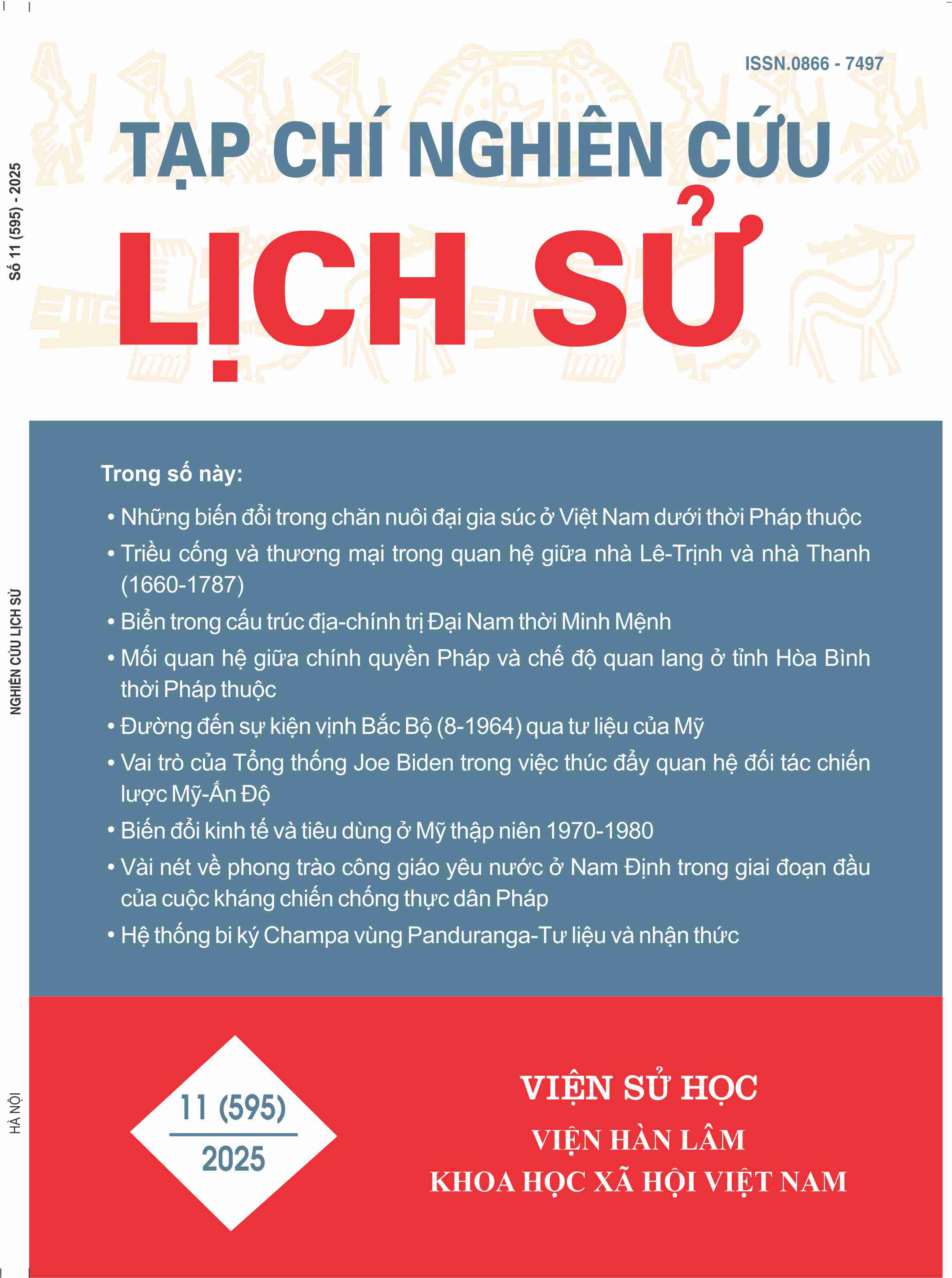
Tribute and Trade in Relations between the Lê-Trịnh Government and the Qing Dynasty (1660-1787)
Abstract
Relations between the Lê-Trịnh government and the Qing dynasty (1660-1787) were not merely a purely political order but a sphere where diplomatic ritual and commerce coexisted. Tribute, symbolizing the hierarchical authority of the “celestial court-vassal” relationship, in practice functioned as a channel for commodity exchange. Overland border trade reflected a constant tension between political control and livelihood needs, as border checkpoints were repeatedly sealed by central orders yet compelled to open under pressure from frontier merchants. Maritime trade - particularly through the rice trade - demonstrated that Đại Việt was a key link in the region’s food-supply chain. Consequently, power endured only when supported by material interests, and ritual held meaning only when it carried substantive value.